Label
Volksempfänger
Volksempfänger, an experimental music label from 1982-1986, channels dissent through lo-fi cassettes from Germany's underground scene.

About
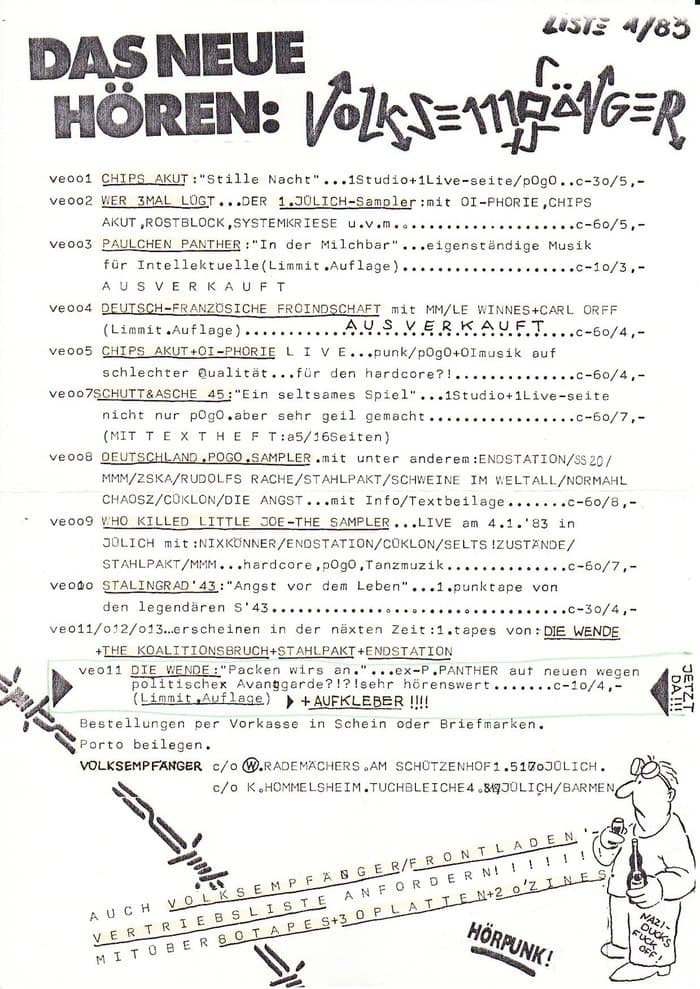
Volksempfänger was born in the shadow of history, its name a nod to the infamous German radios engineered for control. Yet, rather than broadcast propaganda, this label embraced the cassette as a vessel for dissent. From 1982 to 1986, Volksempfänger transmitted a lo-fi revolution from the underground of Germany's experimental scene. Its catalog, a compact archive of 15 releases, illuminates the label's process-driven ethos. The tapes — 13 in total — are fractal artifacts, each reflecting the chaotic energy of their time. The label's aesthetic was fiercely DIY, a sonic sculpture hewn from the raw materials of anti-establishment sentiment. Releases like "Wundertüte '86" and "Deutschland Pogo Sampler" serve as interdisciplinary canvases, where music collides with political commentary. The artists — various, diverse — navigated liminal spaces, their works echoing with the static of defiance. Chips Akut, a recurring presence, captured this spirit in "Stille Nacht" and alongside Oi-phorie in "Live", their soundscapes both exploratory and abrasive. Volksempfänger's commitment to the cassette medium was not mere preference but an act of resistance. These compact carriers of sound were the perfect antidote to the polished veneer of mainstream music, their lo-fi production a deliberate embrace of imperfection. The label's two ventures into print with magazines only expanded this ethos, intertwining visual and auditory experimentation. The legacy of Volksempfänger is sculptural, each release a fragment of a larger narrative, contextualized within the political climate of 1980s Germany. Its impact lingers, a relic of a time when music was both weapon and refuge.